


Coat of Arms of Kingdom of Jerusalem
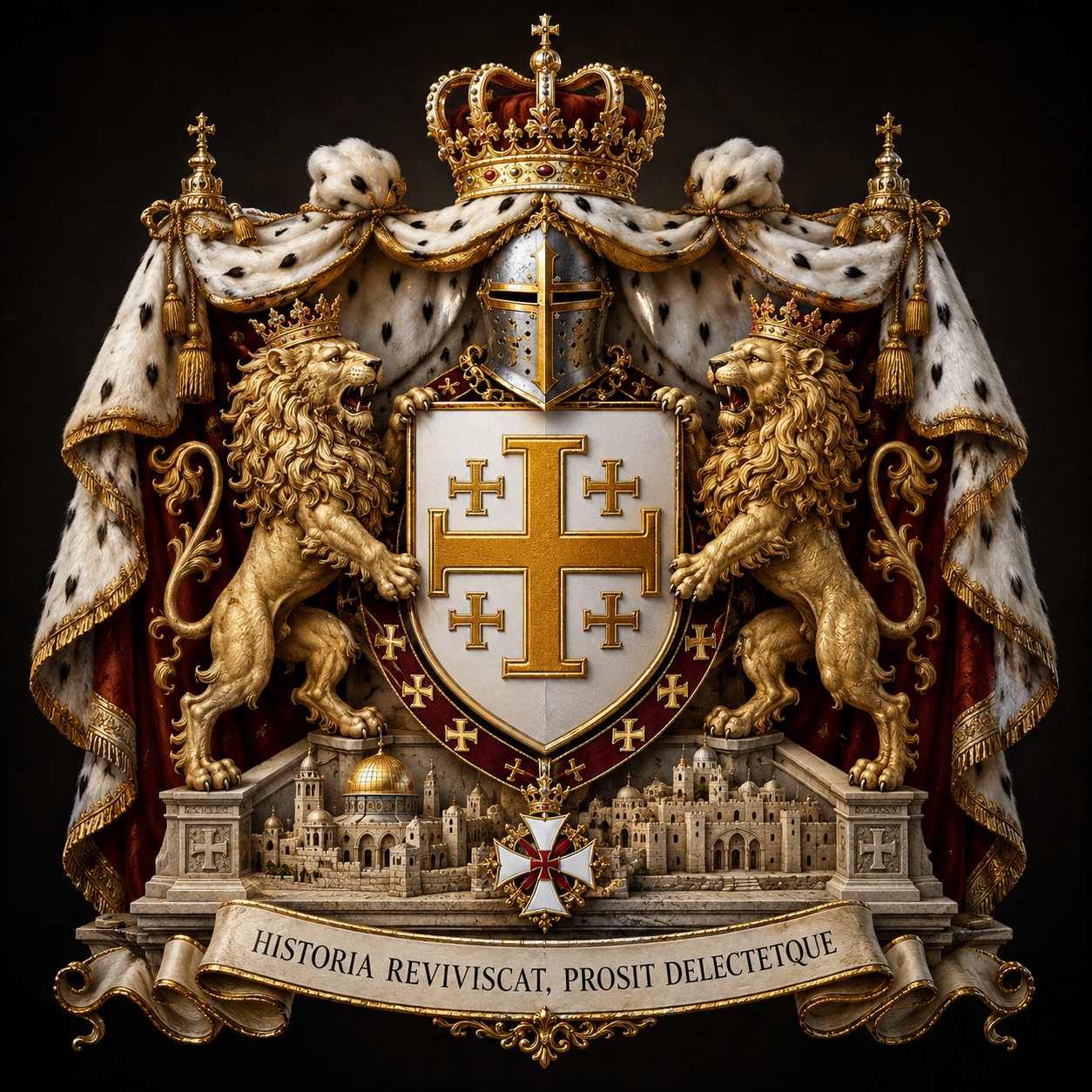
Explanation of the coat of arms
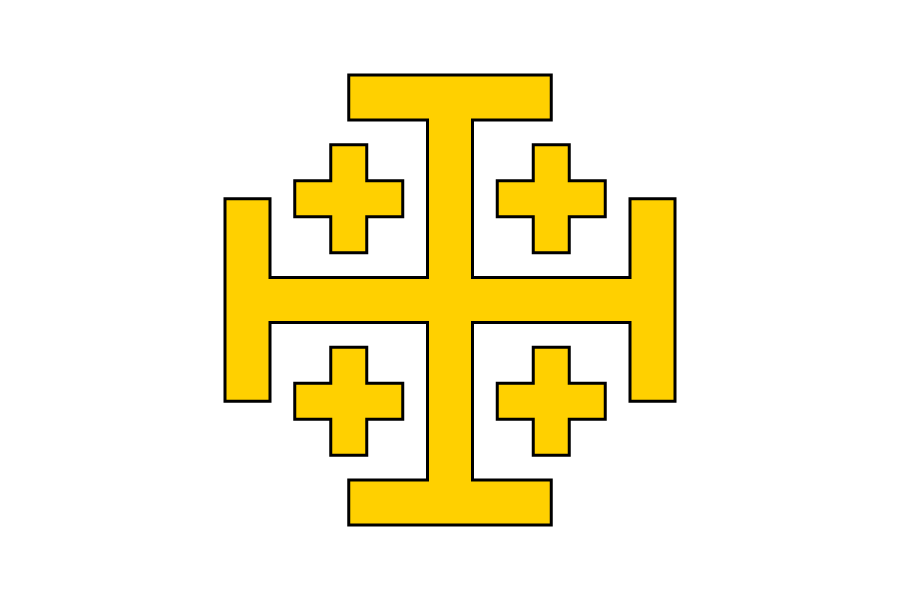
A silver shield with a golden Jerusalem cross: a large powerful cross, accompanied by four smaller Greek crosses.
The shield bearers are two crowned, golden lions standing on their hind legs, facing the shield. Above the shield is a straight-looking, closed silver Crusader helmet with golden decorations. Above the helmet is a royal crown decorated with precious stones.
The coat of arms is surrounded by a red-lined, gold-edged ermine cloak, which descends from under the crown around the shield and the shield bearers. Below the shield hangs a white-enamelled badge of the Order of the Cross, with a red cross in the center.
The pedestal is a stylized building motif depicting the stone walls of Jerusalem and the Church of the Holy Sepulchre. Below the ensemble is a silver, gold-edged emblem ribbon with the motto of the kingdom in black letters:
HISTORIA REVIVISCAT, PROSIT DELECTETQUE
May history come to life, be useful and delightful.
Symbolism of the coat of arms
The heart of the coat of arms is the emblem of the historical Kingdom of Jerusalem: the golden Jerusalem Cross on a silver field. The large central cross represents Christ, and the four smaller crosses surrounding it can be interpreted as symbols of the four Gospels and the spread of their message to all four directions.
The combination of silver and gold deviates from the traditional color rule of heraldry, according to which one metallic color is not usually placed on top of another. The coat of arms of Jerusalem is one of the most famous historical exceptions to this rule. The exceptional color combination has later been interpreted as an expression of the holiness and unique status of Jerusalem. Silver signifies purity, peace and truth, while gold, in turn, divine glory, nobility and royal authority.
The crowned lions supporting the shield represent courage, vigilance and the stability of royal power. They are not only symbols of power, but also guardians of the kingdom, its laws and its citizens. Their crowns indicate that this power is placed at the service of the kingdom and its higher purpose.
The Crusader helmet connects the coat of arms to the historical Kingdom of Jerusalem and its knightly ideals. It reminds us of the readiness to defend faith, justice and the weaker. In the current coat of arms, the helmet does not signify the idealization of war, but loyalty, vigilance and a sense of duty.
The royal crown signifies the majesty of the kingdom and the position of the ruler. At the same time, it reminds us that kingship is not only a privilege, but a duty and responsibility before the King of Kings.
The ermina cloak is one of the traditional royal insignia. The ermina depicts the dignity, purity and integrity of the ruler, the red lining courage, sacrifice and love, and the golden border royal honor. The cloak brings together the different parts of the coat of arms for the protection of one crown and a common kingdom.
The badge hanging below the shield refers to the heritage of the Crusader orders, especially the Knights Templar. The white color signifies purity of faith and sincere service, the red cross sacrifice, courage and loyalty. The badge expresses the knightly virtues: justice, mercy, loyalty and service.
The pedestal depicting the stone walls of Jerusalem and the Church of the Holy Sepulchre ties the coat of arms to the city of Jerusalem and to the central events of Christianity. The Holy Sepulchre is not only a symbol of suffering and death, but above all of resurrection and new life. Therefore, the pedestal also expresses the idea that the past can be revived as a living and constructive heritage.
The motto Historia reviviscat, prosit delectetque summarizes the purpose of the Jerusalem Kingdom. History is not only cherished as a memory, nor is the past imitated as such. It is called back to life so that it can teach, build community and bring joy and meaning to the present.
The Great Seal of the Kingdom
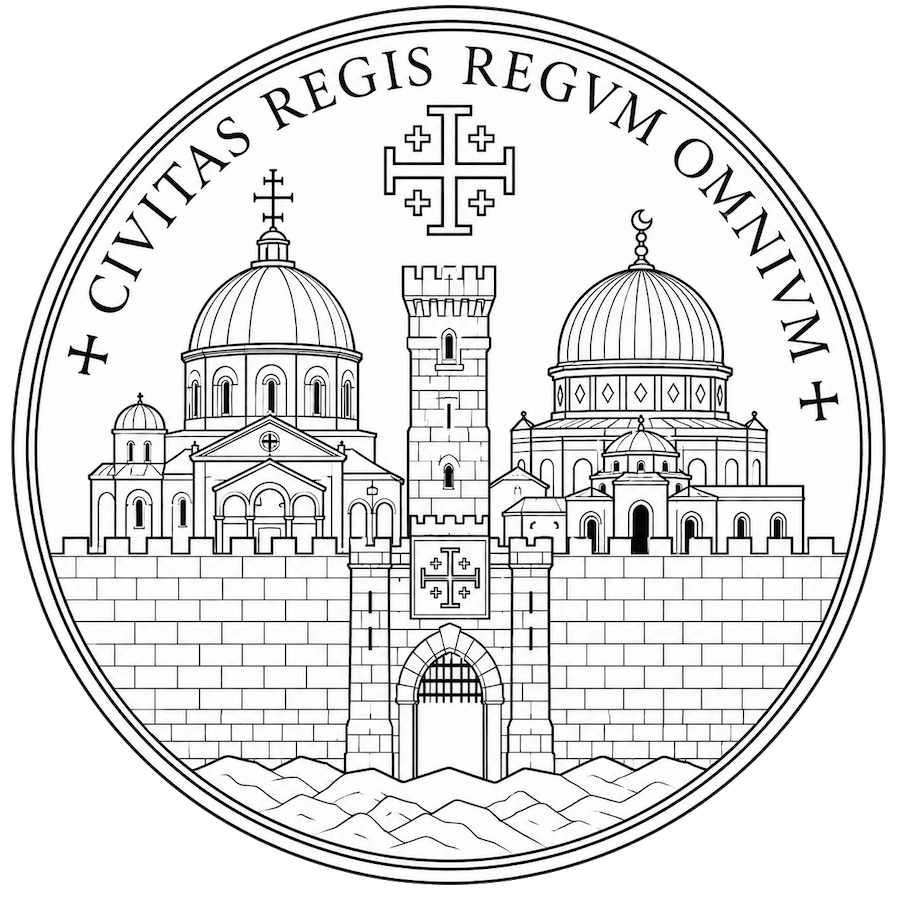
The Great Seal of the Kingdom of Jerusalem depicts the Holy City surrounded by walls. Three buildings tower over the city, alluding to the historical and spiritual landmarks of Jerusalem: the Church of the Holy Sepulchre, the Tower of David, and the Temple, called Templum Domini in medieval sources. The cityscape is not an exact replica of modern Jerusalem, but rather a symbolic representation of the city, similar to medieval seals.
The city wall signifies the continuity, order, and protection of the kingdom. The three buildings recall Jerusalem’s position as a meeting place of history, faith, and different eras. They also depict the kingdom’s connection to the past: The Kingdom of Jerusalem does not seek territory or worldly domination, but rather cherishes the legacy of the historic Kingdom of Jerusalem in a modern and peaceful form.
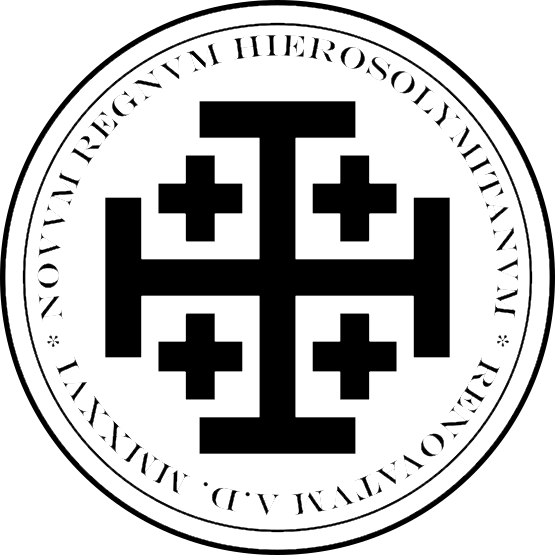
The Jerusalem cross on the seal is the central symbol of the kingdom. The four smaller crosses surrounding the large cross have traditionally been seen as referring to the five wounds of Christ, the four gospels, or the spread of the message from Jerusalem to the four cardinal points of the world. In the seal, the cross expresses the Christian foundation of the kingdom and its vocation to serve justice, peace, and unity.
The seal is surrounded by the Latin inscription CIVITAS REGIS REGUM OMNIUM, “City of the King of Kings.” This phrase, known from the historic royal seals of Jerusalem, suggests that the supreme ruler of Jerusalem is not an earthly king, but the King of Kings. At the same time, it reminds us that all earthly power is fiduciary, limited, and ultimately accountable to God.
On the reverse side of the seal is a large Jerusalem cross surrounded by the text NOVUM REGNUM HIEROSOLYMITANUM * RENOVATUM A.D. MMXXVI "New Kingdom of Jerusalem * Renewed in the Year of the Lord 2026".
The Flag
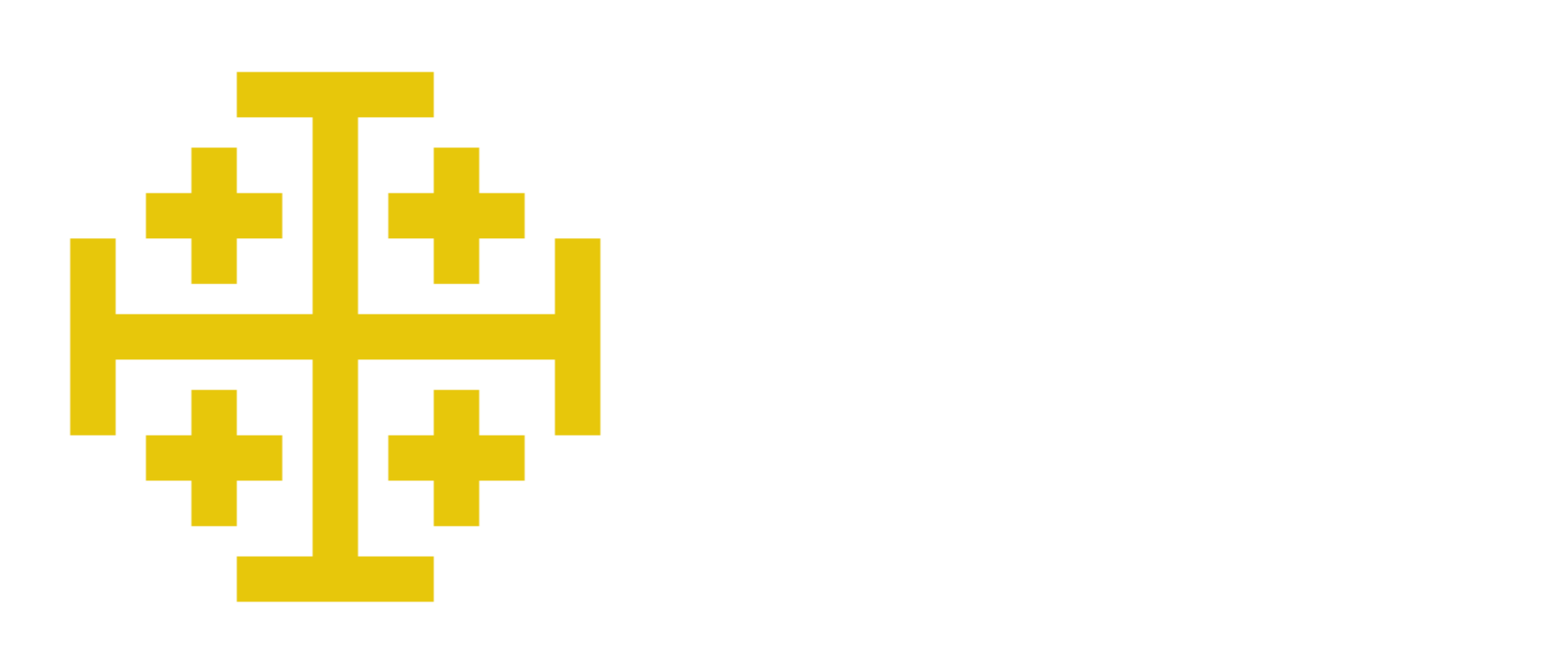
Sekä Jerusalemin kuningaskunnan viirissä että lipussa on kummassakin kultainen (keltainen) jerusalemin risti valkoisella taustalla.
 |
 |