


The purpose of the Kingdom Project
The new Jerusalem Kingdom is based on the idea that history is not just a collection of information about the past. History lives in stories, symbols, customs, objects, buildings and communities. When approached creatively and with an aliveness, the past can transform from distant knowledge into experienced reality. The Kingdom Project aims to build such a connection between the past and the present: not to restore the Middle Ages as they are, but to explore what can still be learned from its traditions, ideals and contradictions in our time.
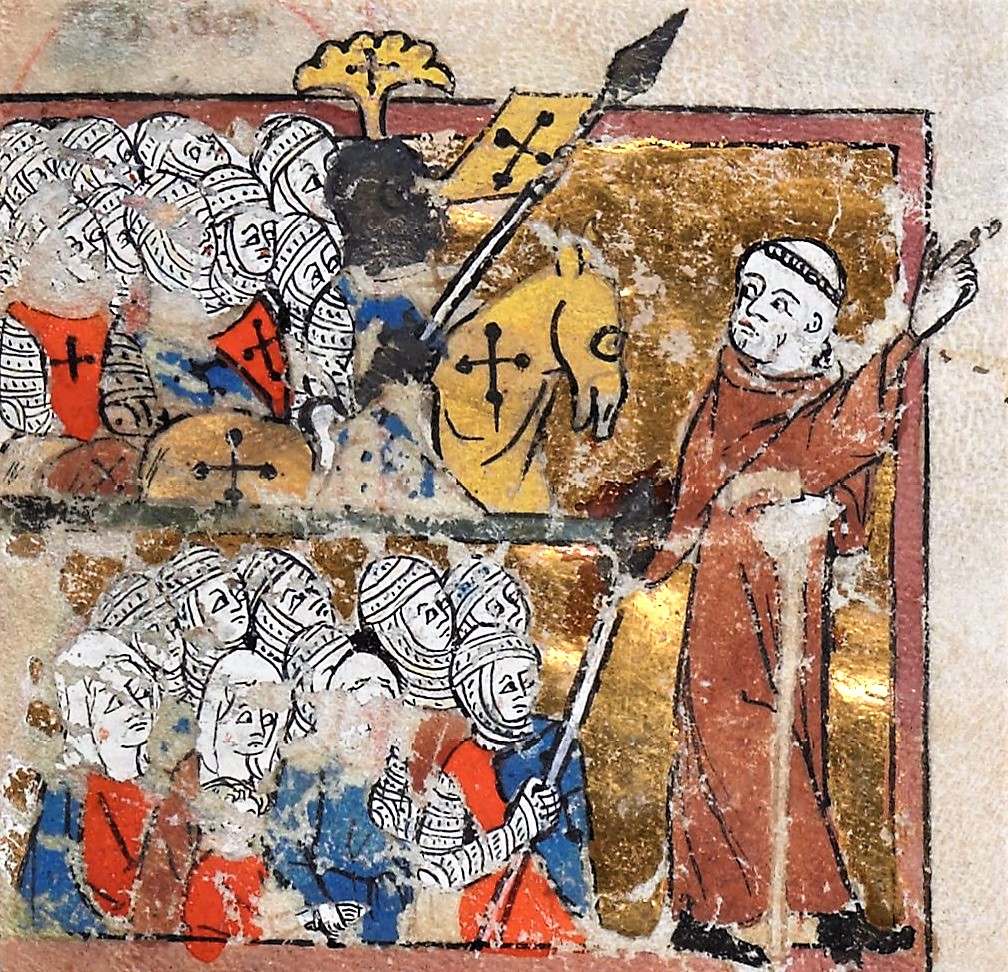
![Egerton ms. 1500, fol. 45v [1]](https://commons.wikimedia.org/wiki/File:Peter_the_Hermit.jpg)
The project is driven by a love of history and a desire to make history visible. Medieval kingdoms were not just a history of rulers and wars, but also a history of laws, cities, churches, trade, pilgrimage, art, symbols and everyday life. When we design coats of arms, seals, coins, titles, administration and ceremonies for a kingdom, we are not just building an imaginary world. At the same time, we are exploring how real societies have built order, expressed power and justified their existence.
Jerusalem is the symbolic center of this project. It is the city that is associated with the most sacred stories of Christianity and whose significance transcends national, linguistic and denominational boundaries. Jerusalem reminds Christians of their common origin, even though the Christian world has been divided into many churches and traditions throughout history. The Kingdom of Jerusalem wants to highlight this connection: not the supremacy of one denomination, but the idea of Christians united by a common faith, a common history and a common responsibility for each other.
The project does not aim to glorify war, conquest or forced conversion. The history of the Crusades includes religious fervor and courage, but also cruelty, political lust for power, suffering and serious injustices. These events should not be forgotten or embellished. However, the past can also be examined by asking what the people of the Crusader era sought, what they feared, what they believed and what kind of communities they built. Historical understanding does not mean accepting everything, but the desire to see people and events in their own time in all their complexity.
In this sense, the project does not seek to revive the Crusades so much as the memory of the Crusades. The focus is particularly on the connection between Christians, the tradition of pilgrimage, international contacts, the encounter of different cultures and the idea of a common goal that could, at least for a moment, transcend the borders between kingdoms and peoples. At the same time, it must be remembered that the relationships between Christians were often contradictory and that Christians also fought against each other. This is precisely why connection is not a given in the project, but an ideal that must be constantly built.
In a secularizing world, the kingdom also serves as an imaginative reflection on what a community emerging from a Christian worldview could be like. The aim is not to establish a theocratic state or to transfer medieval laws to the present day. Instead, one can ask what it would be like to build a society in which human dignity, justice, mercy, responsibility and the common good would not be just words of ceremonial speeches, but the starting points of governance and community life. An imaginary state allows the freedom to examine these questions without having to tie every solution to the structures of current states or parties.
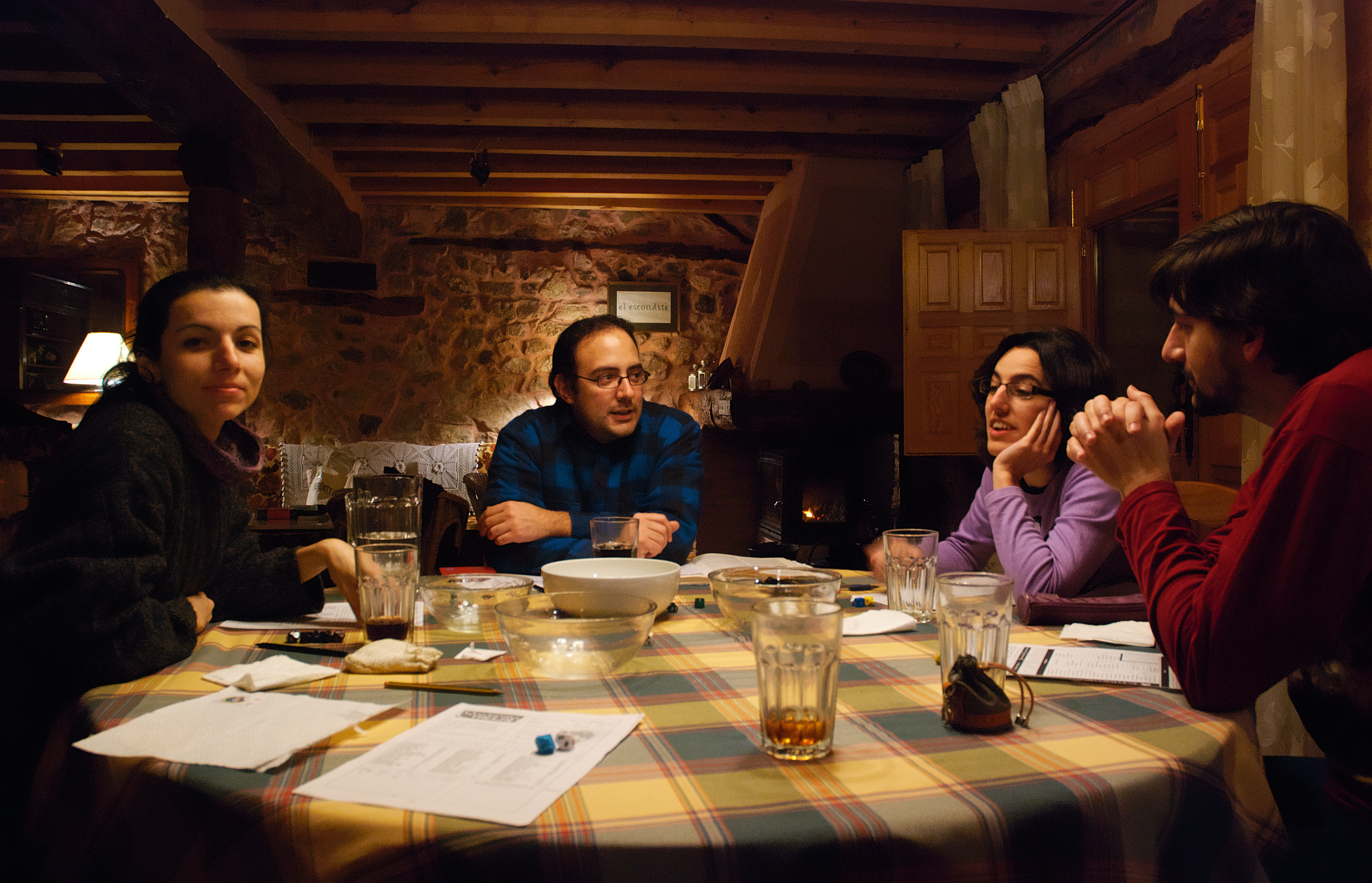

The Kingdom Project is also an educational project. It allows you to get acquainted with the history of the Middle Ages, the Crusader states, the ruling families, feudal society, the relations between the church and secular power, diplomacy, trade and legislation. Historical phenomena become easier to understand when they are not only read in books, but are applied in practice. Designing your own seal raises questions about the symbols of power, coinage about economics and propaganda, and building an administration about how power actually works.
The project also has a communal purpose. The kingdom is not born from the plan of just one person, but from collective creativity. Each new story, object, title, document or event adds a new layer to the kingdom. This kind of world-building provides an opportunity to combine history, theology, art, craft, 3D printing, heraldry and role-playing in a way where participants are not just spectators but creators.
There is also a simple reason behind all this: the project is fun. Serious historical and spiritual themes do not exclude joy, play or imagination. On the contrary, it is precisely play that gives people the opportunity to experiment, build and learn without everything having to be immediately useful. The Kingdom of the Jerusalem is therefore both a serious and playful project: it takes history and Christian heritage seriously, but does not take itself so seriously that there is no room for curiosity, humor and the joy of doing things together.
The Kingdom of Jerusalem does not claim to be a real state, nor does it seek to replace existing societies or churches. It is an imaginary kingdom, a historical experiment, and a shared narrative. Its value lies not in how credibly it imitates the past, but in the questions it raises: what does a community need to hold together, what kind of authority can be considered legitimate, what unites people, and what traditions are worth preserving for future generations.
Building the Kingdom is thus also an exercise in remembrance. It reminds us that history is not dead, that the Christian heritage is not a mere museum piece, and that community has not lost its meaning. The past should not be used as a place of refuge, but as a mirror through which we can examine our own times more clearly. The Kingdom of the Jerusalem invites us to look into that mirror together.